Products
Contact Information
Hotline:
Fax:0086-534-2323974
QQ:1052849458
Email:manager@yuhongchem.com
Address: No.6, Orchard Road, Tianqu Industrial Park, Dezhou, Shandong Province

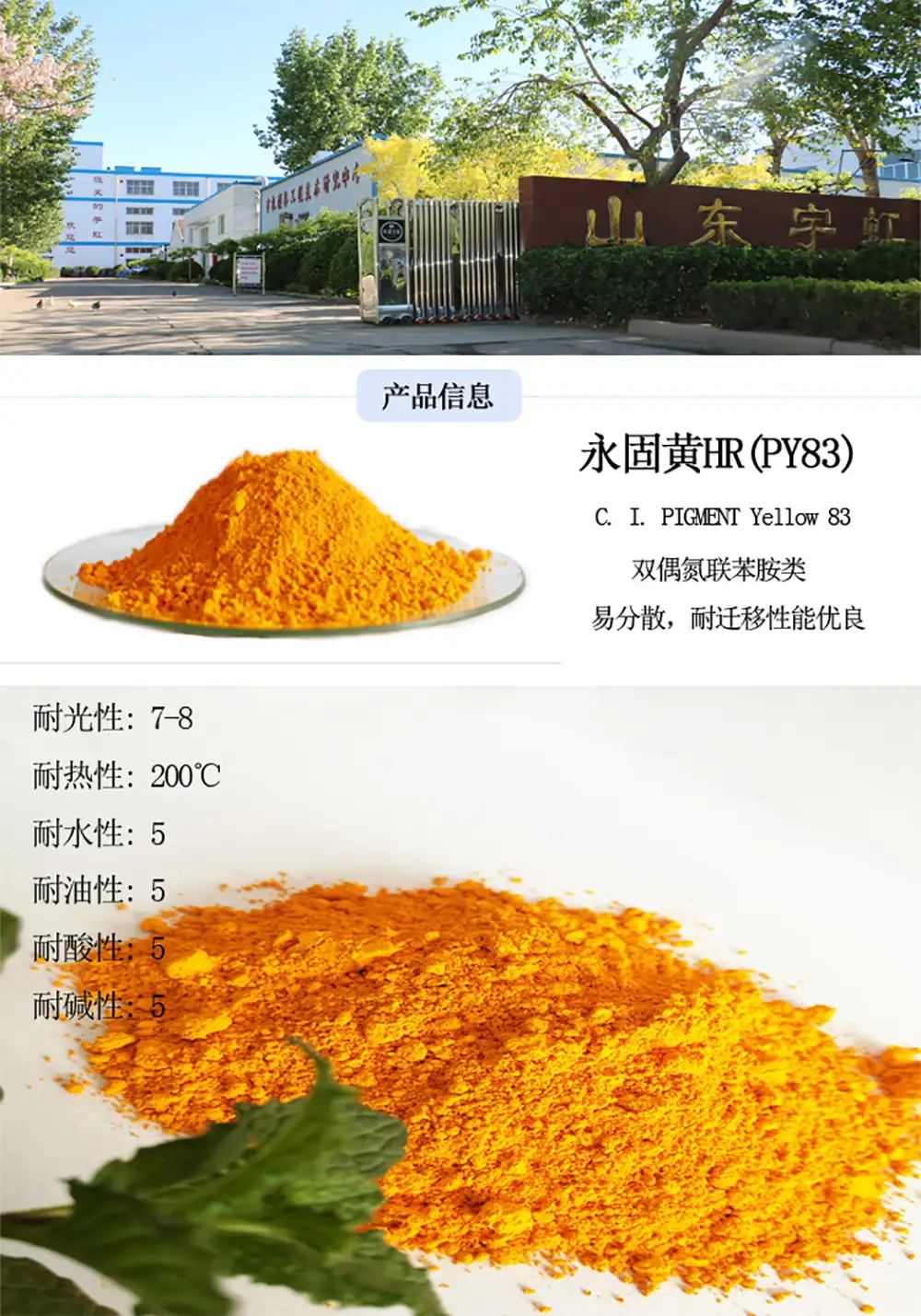
Yonggu Huang HR (YHY8309)
- Commodity name: Yonggu Huang HR (YHY8309)
Classification:
Solvent ink
- Product Description
-
Product Introduction
Product Features
Heat Resistance 250℃/10min Light Resistance 8 Oil Resistance 5 Filtration Value 2 Acid Resistance 5 Alkali Resistance 5 Part Two – Physical and Chemical Properties
Color: Red Light Yellow
105° Volatile Matter ≤3.0%
Fluidity mm: 27-31
Screen Residue: 230 mesh ≤0.1%
Water Soluble Matter ≤3.0%
Oil Absorption (ml/100g) ≤50
PH: 6.5-7.5
Particle Size: 14.489μm
Wetting Angle: 95.9
Filtration Value: 2
Part Three – Fastness Performance
Light Resistance: 7-8
Heat Resistance: 200℃
Water Resistance: 5
Oil Resistance: 5
Acid Resistance: 5
Alkali Resistance: 5
Part Four – Application Characteristics
Yellow Light Red, easy to disperse, excellent migration resistance
Formulation: YHY8309 for solvent ink
Part Five – Areas of Use
Permanent Yellow 83 is suitable for plastics (including EVA, PVC, LDPE, HDPE, PP, etc.), water-based inks (including water-based base inks, corrugated paper inks, etc.), solvent inks, automotive coatings, latex paints, and can also be used for solvent-based wood coloring, artistic colors, and fabric printing.
The formulation for water-based ink is YHY8304
The formulations for plastics are YHY8301, YHY8302, YHY8305
The formulation for solvent ink is YHY8309
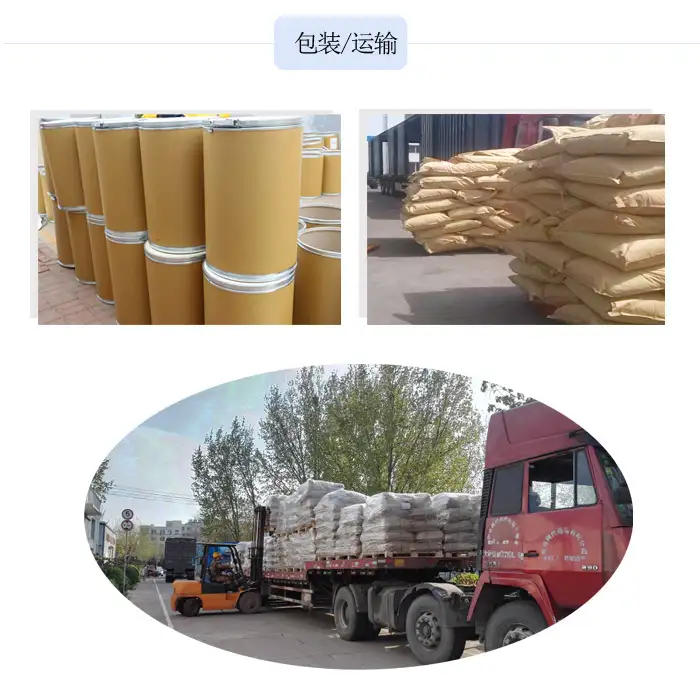
Packaging and Transportation
Key words:
Yuhong Pigment
Thanks to Yuhong customers for their trust and support over the years
FAQ
In which industries are Yuhong pigment products applied?
The product is widely used in industries such as plastics, rubber, inks, paints and coatings, papermaking, education and culture, printing, and printing paste.
How to test the coloring power of pigments
Pigment coloring strength, also known as actual strength, refers to the ability of a pigment to impart color. High coloring strength pigments can reduce the amount used during application, thereby increasing economic value, which is a significant consideration for users. For example, the coloring strength of Benzidine Yellow is very high, exceeding that of Chrome Yellow by 9 times, while Chrome Yellow is 3-4 times higher than Titanium Yellow. For instance, if the coloring strength of Lightfast Yellow G is set at 100, Lightfast Yellow 10G is only 48. The determination of pigment coloring strength is generally conducted between standard samples of the same variety. The coloring strength of the standard sample is set at 100%, and according to product standards, the test sample should not be lower than 95%. The determination method is similar to color comparison, where colored pigments are diluted with white pigments such as Zinc Barium White or Titanium White, and Zinc Oxide, followed by a comparison of coloring strength with the standard sample. When the coloring strength of the test sample is greater than or less than that of the standard sample, the amount of the standard sample can be adjusted to calculate the coloring strength percentage of the test sample. One method for intermediate control of determining coloring strength is to accurately weigh the test sample and standard sample, manually grind them with white ink containing 75% Zinc Oxide or 60% Rutile Titanium White, and calculate the coloring strength based on the amount of white ink consumed. This method is time-saving and labor-saving, and the results are quite accurate, but it is a non-standard determination method. A newer method for determining the relative coloring strength of pigments and the relative scattering strength of white pigments is to measure the absorption index of the prepared test sample and the standard sample using a spectrophotometer. The ratio of the two is expressed as a percentage, which represents the relative coloring strength. Similarly, after adding black pigment paste to white pigments, the scattering index of the test sample and the standard sample can be measured with instruments, and the ratio is expressed as a percentage, representing the relative scattering strength. The principles and determination methods can refer to the GB/T 13451.2-92 standard.
Shandong Yuhong produces organic pigments: Benzidine Yellow G, Permanent Yellow 2GS, Brilliant Red BK, Gold Red C, Permanent Orange F2G, Permanent Orange Yellow G, Lightfast Red, Lissol Red, and various shades of red, yellow, and orange pigments, which are applied in offset inks, solvent inks, water-based inks, printing pastes, plastics, paints, and other systems.
What are the types of organic pigments?
Classification and development overview of organic pigments, organic pigments have a wide variety of chromatographic types and different classification methods.
(1) Classified by their chromatographic colors: yellow-orange pigments, red (with yellow, green) pigments, purple, brown pigments, and green pigments.
(2) Classified by their application fields: pigments for coatings, pigments for inks, pigments for plastics (rubber), and pigments for cosmetics, which can be divided into four major categories.
(3) Classified by their chemical structure types, they can be divided into three major categories: azo, phthalocyanine, and heterocyclic.
Product Consulting
Note: Please leave your contact information and our professionals will contact you as soon as possible!
More products
Uses of solvent-based inks include excellent steam cooking resistance, low viscosity, and high opacity.
Features: High tinting strength, low viscosity, excellent storage stability.
Everlasting Peach Red FBB (YHR14601)
Characteristics: Low viscosity, excellent storage stability.
Features: High coloring strength, low viscosity, excellent stability in early spring.
Yuhong Pigment Co.,LTD. It is a professional company that produces "Ninghong" and "Kaihong" brand series of organic pigments. It focuses on "easy dispersion" of pigments and is committed to the cause of pigments. Products are widely used in ink, plastic, rubber, paint, paint, paper, culture and education, printing, printing paste and other industries.
Pigment Application
Contact Us
Hotline: +86-18263029986
Fax:0086-534-2323974
E-mail:manager@yuhongchem.com
Address: No.6, Orchard Road, Tianqu Industrial Park, Dezhou, Shandong Province
Official WeChat